Tricolor, First Brands, and Now MFS: The Biggest Risk in ABF Is Not the Market
March 18, 2026
In September 2025, Tricolor Holdings and First Brands Group collapsed within weeks of each other. Tricolor, a subprime auto lender, filed for liquidation under allegations of an $800 million collateral fraud scheme. Double-pledged auto loan portfolios, and manipulated loan tapes, left institutional lenders counting losses. First Brands, an automotive parts supplier, entered bankruptcy amid accusations of off-balance-sheet financing fraud and the double- and triple-pledging of receivables and inventory. Then, in February 2026, Market Financial Solutions (MFS), a UK-based specialist property lender with a £2.4 billion loan book, entered administration. Court filings cited fraud, double pledging of property collateral, and potential shortfalls of hundreds of millions of pounds. Some of the most sophisticated global banks and credit funds were among the exposed parties.
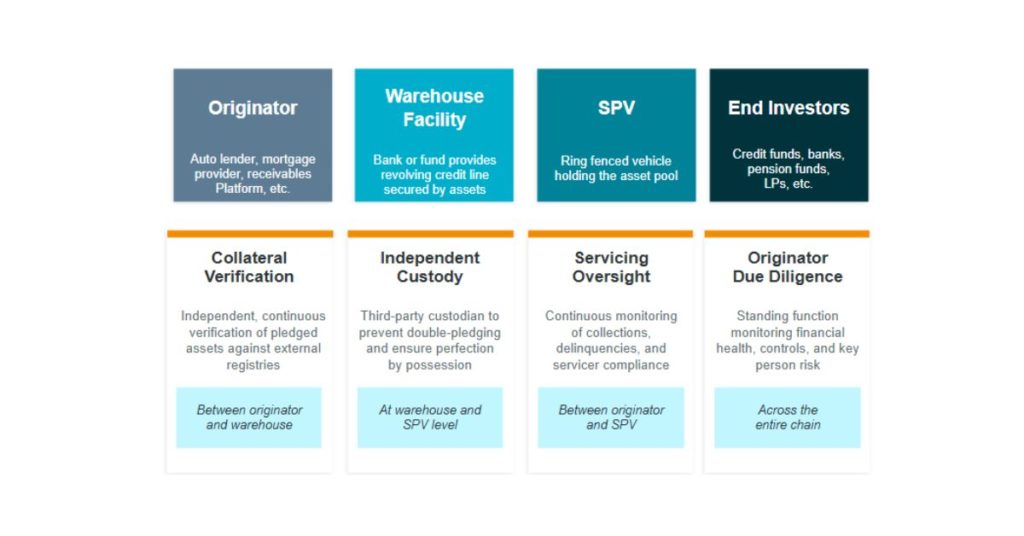
Figure 1 – ABF Structure: Where Operational Gaps Emerge
Three events. Two continents. One common thread:
None of these failures were caused by market risk. They were caused by operating model risk.
For any GP or institutional investor entering asset-based finance, these cases are not cautionary anecdotes. They are a blueprint of what goes wrong when operational infrastructure is treated as an afterthought.
The Shift: From Corporate Credit to Asset-Based Finance
According to Preqin, private credit has grown at approximately 13% annually since 2012, but the growth story is still evolving. While direct lending remains the dominant strategy, representing roughly half of global private credit AUM, LP appetite is increasingly shifting toward asset-based finance: consumer and commercial lending, trade receivables, equipment finance, specialty mortgages, and other forms of collateral-backed credit.
The drivers are structural. Banks are increasingly stepping back from originating and holding ABF assets on balance sheet, driven by tighter capital rules and forthcoming Basel reforms (even as many remain active as warehouse facility providers). Insurers are drawn in by the yield pickup and the ability to match longer-dated liabilities. For GPs, ABF offers diversification, differentiated duration and cash flow profiles and access to a $30 trillion addressable market that sits far beyond the bounds of traditional sponsor finance
The opportunity is real. But the operational challenge of executing it safely is fundamentally different from anything most private credit managers have built their platforms to handle.
ABF Is Not Direct Lending: Why the Operating Model Must Change
Direct lending is, at its core, borrower centric. The GP evaluates a company, underwrites a loan, monitors a covenant package, and manages a relationship. The operational model is well understood and supported by a mature vendor ecosystem.
Asset-based finance requires a fundamentally different orientation: the focus shifts to the collateral. Rather than underwriting a single corporate borrower, the GP must evaluate the quality, verifiability, and ongoing performance of hundreds or thousands of individual underlying assets (auto loans, mortgages, receivables, equipment contracts). The pre-deal phase alone demands granular look-through analysis and stress testing across each line in the pool, often at a tranche level.
If a manager’s technology cannot model and monitor this granularity, the risk exposure is not transactional but structural.
Most ABF transactions are structured around forward flow agreements, where assets are delivered on a continuous basis from an originator. This is where the operating model complexity compounds significantly.
What Tricolor, First Brands, and MFS Teach Us
Warehouse lending sits at the heart of ABF. An originator, whether an auto lender, a specialty mortgage provider, or a trade receivables platform, pledges pools of assets to a warehouse facility, drawing down funding as new loans are originated. The assets serve as collateral, and the capital provider’s protection (whether a warehouse lender, a fund manager deploying LP capital, or a tranche investor in a securitisation) depends entirely on the quality, verifiability, and segregation of that collateral.
That being said, each of the failures we are discussing in this article, while distinct in geography and asset class, exposed the same category of vulnerability: gaps at the intersection of operating model design and technology infrastructure.
At Alpha Alternatives, we have analysed each case in detail to inform the advisory work we deliver to clients entering or scaling ABF strategies. The common lessons are clear:
- Collateral verification must be independent, automated, and continuous. Relying solely on originator-provided certifications is insufficient. The operating model must include a data operations function capable of ingesting loan-level data, cross-referencing it against independent sources (e.g. title databases, property registries, vehicle registries) and flagging anomalies automatically. This is a technology investment, a data engineering capability, and dedicated operational resource.
- Independent custody is a structural safeguard. Third-party custodians support perfection by possession or control, prevent double-pledging, and operationalise clear release and return mechanics. Managers must insist on, and operationally integrate with, an independent custodian, rather than allowing the originator to hold loan files. This means building custodian oversight into the operating model as a distinct function, with regular reconciliation between the custodian’s records and the loan tape.
- Servicing oversight. The originator typically retains servicing responsibilities. The investor must continuously monitor collections, delinquencies, borrower communications, and servicer compliance. Without defined procedures and reporting standards, problems compound silently until they become material.
- Concentration and portfolio monitoring. Warehouse portfolios are dynamic: assets are added, repaid, and substituted continuously. The investor needs real-time or near-real-time analytics covering concentration limits, weighted average credit quality, geographic exposure, and vintage diversification. This should be managed as an ongoing operational function, not a quarterly reporting exercise.
- Fraud prevention requires cross-referencing infrastructure. The industry-level solution, a shared registry or blockchain-based ledger, remains conceptual with limited adoption. At the individual investor level, the practical mitigation is more aggressive independent verification: demanding loan-level unique identifiers and systematically cross-referencing against public registries to detect double-pledging before it becomes a loss event.
- Originator due diligence must be a standing function, not a deal function. The deal-by-deal diligence model does not catch ongoing fraud. The target operating model needs a permanent originator oversight function that continuously monitors the originator’s financial health, control environment, key person risk, and operational metrics, closer to how a CLO trustee or rating agency conducts ongoing surveillance. This is a permanent operational capability, designed in as a key pillar within the investors’ operating model.
This is precisely where vendor selection becomes a strategic decision. Choosing the wrong technology platform to manage ABF portfolios is not a decision that can easily be unwound, as it locks the manager into a capability constraint for the next five to six years. The technology must support the granularity, frequency, and configurability that ABF demands across all of these structures.
Leverage, Borrowing Bases, and Waterfall Complexity
ABF strategies typically employ multiple layers of leverage at the fund level, the SPV level, and the asset level. The competitive returns that attract investors are, in part, a function of how effectively a manager can optimise across these layers, selecting the most appropriate facility for each deployment and managing aggregate exposure in real time. Are your processes able to track all of them? Are you able to allocate and maximise returns by selecting the most appropriate leverage facility? How are you optimising for it?
Alpha Alternatives helps managers design leverage tracking frameworks, build multi-facility allocation models, and implement the technology infrastructure to optimise across these layers.
Borrowing base calculations and waterfall mechanics (where structures are tranched) in ABF are bespoke, non-standard, and vary significantly from deal to deal. They are computationally heavy and, in most firms today, still run through Excel-based models that cannot scale. For GPs entering ABF, the question is straightforward: can your current operating model handle multi-layered leverage tracking, dynamic borrowing base computation, and bespoke waterfall execution? If the answer is no, the risk is not operational inefficiency — it is a structural exposure that will compound as the portfolio scales.
This is where Alpha Alternatives’ Credit Advisory practice adds the most value by designing the processes, selecting the technology, and building the operating model to manage these complexities from day one.
The Biggest Risk Is Not the Market
The ABF opportunity is compelling, the capital is flowing and the LP demand is clear. However, the managers who will succeed in this market are those who recognise that their greatest risk is not market risk, it is operating model risk. It is the gap between the complexity of the asset class and the readiness of the infrastructure built to manage it.
As managers scale, the relationship with LPs evolves. Investors will ask harder questions about collateral verification, servicing oversight, concentration risk management, and operational resilience. The managers who can answer those questions with confidence and backed by robust processes, fit-for-purpose technology, and a clearly articulated target operating model, will be the ones who win mandates and retain capital.
At Alpha Alternatives, our Credit Advisory practice sits at precisely this intersection of strategy, operations, and technology. We work with GPs, banks, and insurers to design and implement ABF-ready operating models, from origination infrastructure and collateral monitoring through to vendor selection, leverage management, and investor reporting.
To continue the conversation, contact us today: alts-info@alphafmc.com
* Contact Us
"*" indicates required fields